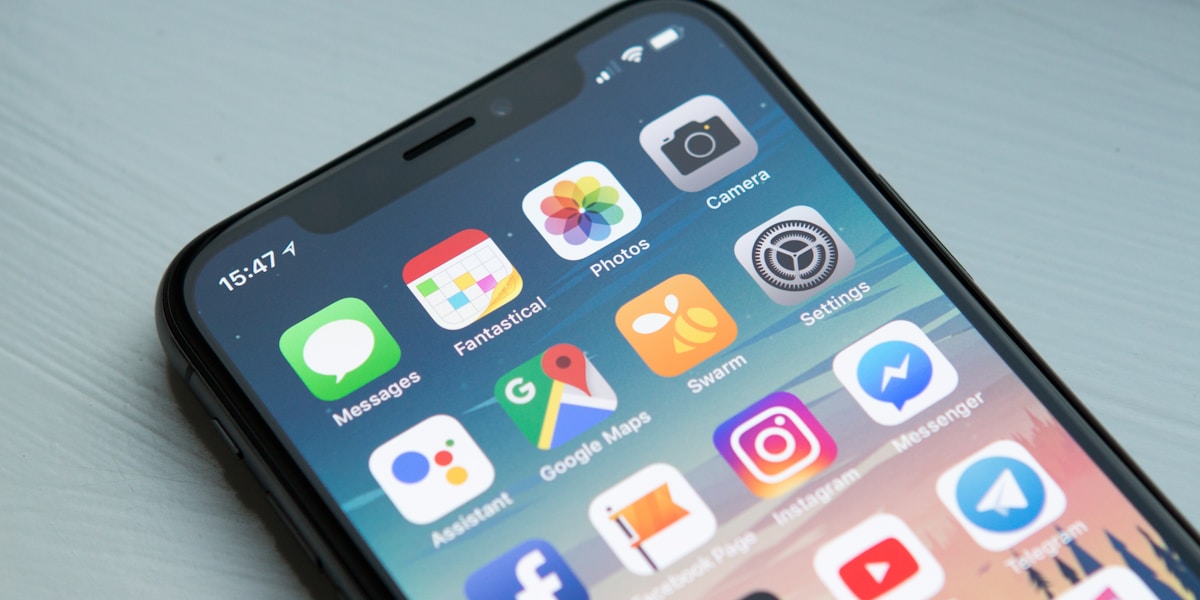
The arrival of 5G technology marks one of t he most significant leaps in mobile connectivity since the transition from 3G to 4G. With download speeds up to 100 times faster than its predecessor and la tency reduced to mere milliseconds, 5G is not just an incremental upgrade—it i s a transformative force reshaping the entire landscape of mobile app developm ent. For businesses and developers alike, understanding the implications of th is technology is essential to staying competitive in an increasingly connected world.
Unprecedented Speed and Performance
At the heart of 5G's impact is its extraordinary speed capability. While 4G networks typically offe r download speeds of around 100 Mbps, 5G can deliver speeds exceeding 10 Gbps under optimal conditions. This dramatic increase enables mobile applications t o handle data-intensive operations that were previously impractical or impossi ble on mobile devices. Developers can now create apps that seamlessly stream 4 K and even 8K video content without buffering, download large files in seconds , and provide real-time data synchronization across multiple devices. For indu stries such as media, entertainment, and enterprise software, this opens doors to entirely new categories of applications that prioritize rich media content and instantaneous data access.
Ultra-Low Latency Enables Real-Time Expe riences
Beyond raw speed, 5G's most revolutionary feature is its ultra- low latency—reducing response times from approximately 50 milliseconds on 4G n etworks to as little as 1 millisecond. This near-instantaneous communication b etween devices and servers is a game-changer for applications requiring real-t ime responsiveness. Multiplayer mobile gaming becomes significantly more compe titive and enjoyable as lag virtually disappears. Financial trading applicatio ns can execute transactions with minimal delay. Perhaps most importantly, this low latency is critical for applications in healthcare, where remote surgical procedures and real-time patient monitoring demand split-second precision. Mob ile app developers must now design with this responsiveness in mind, creating experiences that leverage instantaneous feedback loops.
Revolutionizing AR and VR Applications
Augmented Reality (AR) and Virtual Reality (VR) have long promised to transform how we interact with digital content, but tech nical limitations have historically constrained their mobile implementation. 5 G changes this equation entirely. The combination of high bandwidth and low la tency allows AR and VR applications to process complex graphics and spatial da ta in the cloud rather than on the device itself. This shift enables lighter, more affordable headsets and glasses while delivering more immersive experienc es. Retail apps can now offer sophisticated virtual try-on features, real esta te applications can provide immersive virtual property tours, and educational platforms can create interactive 3D learning environments. As 5G infrastructur e expands, we anticipate a surge in AR/VR mobile applications that blur the li nes between physical and digital realities.
Accelerating the Internet o f Things (IoT)
5G technology is designed to support massive device conn ectivity—up to one million devices per square kilometer compared to 4G's appro ximately 100,000. This capacity expansion is catalyzing explosive growth in In ternet of Things (IoT) applications. Mobile apps are increasingly becoming the central control hubs for smart homes, connected vehicles, industrial sensors, and city infrastructure. Developers are creating sophisticated applications th at monitor and manage everything from home security systems to agricultural eq uipment, factory machinery, and healthcare wearables. The ability to connect a nd control thousands of devices through a single mobile interface creates unpr ecedented opportunities for automation, efficiency, and data-driven decision m aking across virtually every industry sector.
New Business Models and O pportunities
The capabilities introduced by 5G are giving rise to innov ative business models and service offerings. Edge computing, powered by 5G's d istributed network architecture, allows data processing to occur closer to the end user, reducing bandwidth costs and improving privacy. This enables subscri ption-based cloud gaming services, real-time collaborative platforms, and AI-p owered applications that process data locally while leveraging cloud intellige nce. Developers can now build applications that were previously limited to des ktop environments, including professional video editing tools, complex design software, and advanced analytics platforms. Companies that recognize and capit alize on these opportunities will establish significant competitive advantages in their respective markets.
Challenges and Considerations for Develope rs
Despite its transformative potential, 5G also presents challenges th at developers must address. Network coverage remains inconsistent, requiring a pplications to gracefully handle transitions between 5G, 4G, and Wi-Fi connect ions. Battery consumption becomes a critical concern as high-speed data transf er can drain device power rapidly. Security considerations intensify as more d evices connect and share data across networks. Additionally, the cost of 5G in frastructure and data plans may limit initial adoption rates in certain market s. Successful mobile app development in the 5G era requires careful optimizati on, robust fallback mechanisms, and thoughtful user experience design that acc ounts for varying network conditions.
Conclusion: Preparing for a 5G-Po wered Future
The impact of 5G on mobile app development extends far bey ond faster download speeds. It represents a fundamental shift in what is possi ble on mobile platforms, enabling experiences that were once confined to scien ce fiction. From immersive AR environments to intelligent IoT ecosystems and r eal-time collaborative tools, 5G is the foundation upon which the next generat ion of mobile innovation will be built. For businesses and developers, the imp erative is clear: embrace this technology, experiment with its capabilities, a nd prepare applications that leverage its full potential. Those who do will no t only meet evolving user expectations but will define the standards for mobil e excellence in the years to come. The 5G revolution is here, and it is transf orming mobile app development in ways we are only beginning to imagine.