Planning a website begins with one question: how much will it cost?
In India, the answer can range from a few thousand rupees for a simple site to several lakhs for a custom platform. The difference is not just the number of pages. Design, features, integrations, performance, security and support all influence the final price.
This guide explains what businesses should expect before requesting a quotation and how to avoid paying for the wrong solution.
First, What Kind of Website Do You Need?
A local service provider may need a professional website that explains its services and generates enquiries. An online retailer needs product pages, payments and order management. A growing company may require dashboards, customer accounts or automation.
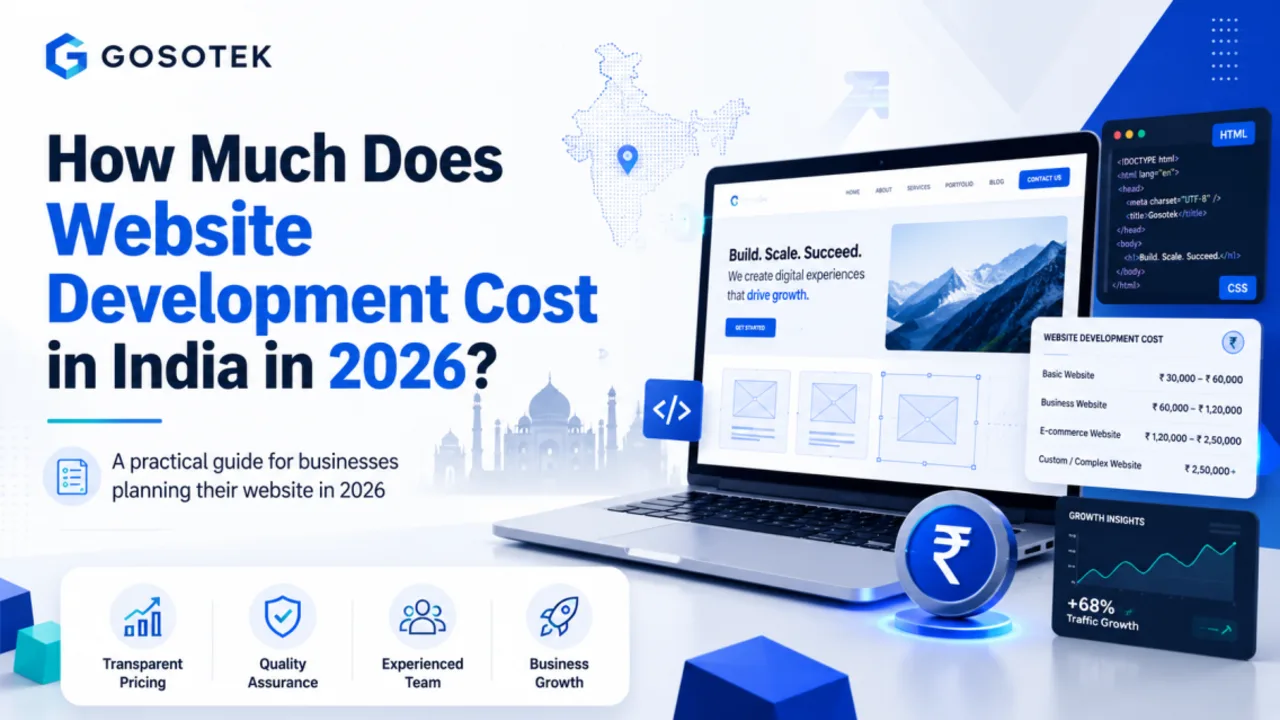
| Website type | Typical purpose | Indicative cost |
|---|---|---|
| Basic informational website | Online presence for a small business | ₹5,000–₹25,000 |
| Business website | Branding, service pages and lead generation | ₹10,000–₹50,000 |
| E-commerce website | Product sales, payments and order management | ₹20,000–₹1,00,000+ |
| Custom web application | Portals, dashboards, bookings or automation | ₹50,000–₹5,00,000+ |
These figures are broad market estimates. The final cost depends on the selected features, design requirements, integrations, support and hosting arrangements. Two websites with the same number of pages can cost very different amounts because their design and technical requirements differ.
What Affects Website Development Cost?
Functionality is usually the biggest cost factor. A basic contact form is simple. A website with user registration, payment gateways, advanced filters, live inventory, API integrations or role-based dashboards requires more planning, development and testing.
Design also matters. A ready-made template can reduce cost and launch time, but it may limit how closely the site reflects your brand. Custom UI/UX design takes more effort, yet it creates a more distinctive and conversion-focused experience.
The technology used affects the initial investment and future flexibility. WordPress can suit many business websites, while custom development is often better for complex workflows, integrations or platforms expected to scale.
Content is another overlooked expense. Professional copywriting, product uploads, photography, graphics and SEO-focused service pages may not be included in a low quotation. Always confirm exactly what the proposal covers.
Template or Custom Website?
A template-based website is practical when the budget is limited, the requirements are straightforward and the business needs to launch quickly. It can work well for portfolios, local businesses and early-stage companies.
Custom development makes more sense when the website is central to business operations. It provides greater control over design, performance, features and scalability. The initial cost is higher, but it can prevent expensive rebuilding later.
The right choice is not automatically the most expensive one. It is the option that supports your needs without creating unnecessary limitations.
Do Not Forget Ongoing Costs
Website development is rarely a one-time expense. You may also need a domain, hosting, SSL, backups, security updates and maintenance.
Basic hosting may be affordable, while high-traffic or e-commerce websites need stronger infrastructure. Maintenance can include updates, bug fixes, speed improvements, security monitoring and small content changes.
Before approving a proposal, ask whether these services are included or billed separately.
Can You Build a Website Through a Subscription Plan?
Not every business wants to pay the full website-development cost upfront. Gosotek offers subscription-based website plans for 3 months, 6 months and 5 years, allowing businesses to choose an option based on their budget, requirements and long-term goals.
Shorter plans may suit businesses that want to launch quickly or begin with essential features. Longer plans may be more suitable for companies that need ongoing technical support and a stable website solution over several years.
Depending on the selected package, the plan may include website setup, hosting, maintenance, security updates, performance support and selected content or feature changes.
Before choosing a plan, businesses should confirm:
What services are included.
Domain and hosting charges.
Website ownership terms.
Maintenance and update limits.
Renewal and additional-feature costs.
A subscription plan can make website development easier to manage financially, but the right option depends on available budget, the level of support, functionality and long-term flexibility the business requires.
However, the price and inclusions can vary by plan. Before subscribing, confirm the contract duration, renewal conditions, ownership terms, maintenance limits and whether additional features will be charged separately.
Questions to Answer before Requesting a Quote
Be clear about:
The primary goal of the website.
Your target audience.
Essential and optional features.
Content, product-upload and integration requirements.
Your launch timeline and budget range.
A reliable agency should ask questions before giving a final price. An instant quotation without understanding your requirements often leads to hidden costs, missing features or a website that fails to solve the real business problem.
Frequently Asked Questions
How much does a basic website cost in India in 2026?
A basic business website may cost between ₹5,000 and ₹25,000, depending on the number of pages, design quality, content requirements and included support. Custom features or integrations can increase the final price.
Is hosting included in website-development charges?
It depends on the package. Some website-development plans include hosting, SSL and maintenance, while others charge for them separately. Always confirm the complete list of inclusions before approving a quotation.
Is a template website suitable for a small business?
Yes. A template-based website can be suitable for small businesses that need a professional online presence with straightforward features. Custom development is generally more appropriate when branding, performance or advanced functionality is a priority.
Can I choose a subscription-based website plan?
Yes. Gosotek offers 3-month, 6-month and 5-year subscription plans for different budgets and business requirements. Plan inclusions, ownership terms, maintenance limits and renewal conditions should be reviewed before selection.
How long does it take to develop a website?
A basic website may take a few days or weeks, while e-commerce websites and custom platforms usually require more time. The timeline depends on design approval, content readiness, features, integrations and revision requirements.
Final Thoughts
Website development cost in India in 2026 depends on what the website must achieve, not simply how many pages it contains.
Choosing the cheapest option may save money initially, but weak design, poor performance and limited scalability can cost more later. A well-planned website should build credibility, generate enquiries, support sales and make it easier for customers to interact with your business.
Gosotek helps businesses choose the right development approach based on their goals, budget and growth plans. Whether you need a business website, an e-commerce store or a custom platform, the first step is understanding what the website must accomplish.
Ready to plan your website? Request a website-development estimate from Gosotek and receive a solution aligned with your business needs.