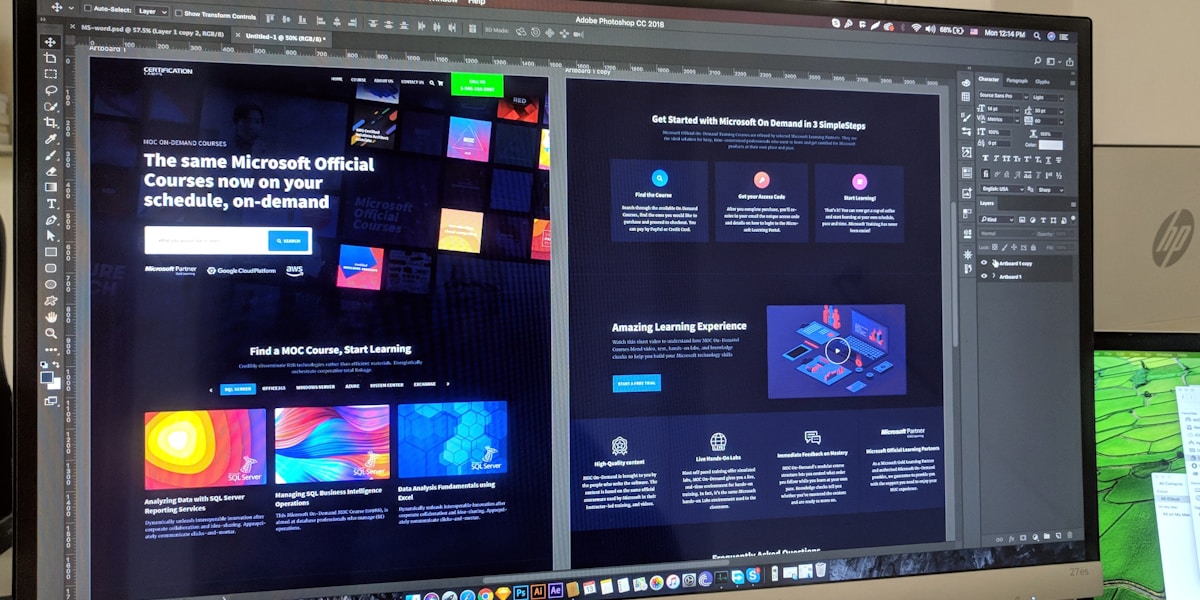
In today's hyper-competitive digital landscape, first impressions are fo rmed in milliseconds. When a potential customer lands on your website or opens your application, they immediately begin judging your credibility, professiona lism, and trustworthiness based solely on what they see and how they interact with your platform. This split-second decision-making process is why User Inte rface (UI) and User Experience (UX) design have evolved from nice-to-have feat ures into critical business imperatives that directly impact your bottom line.
The Connection Between Design and Business Outcomes
Many busine ss leaders still view design as purely aesthetic—a superficial layer of polish added at the end of the development process. This perspective fundamentally mi sunderstands the strategic value of UI/UX design. Research from Forrester show s that every dollar invested in UX returns between $2 and $100 in benefits. Co mpanies that prioritize user experience outperform the S&P 500 by 35%, while p oor UX remains one of the leading causes of abandoned shopping carts, with est imates suggesting that e-commerce sites lose $1.4 trillion annually due to che ckout process issues alone.
The relationship between design and business success extends far beyond visual appeal. Effective UI/UX design reduces cogni tive load, eliminates friction points, and guides users toward desired actions . When customers can easily find what they're looking for, complete tasks effi ciently, and enjoy the process, they reward your business with increased engag ement, higher conversion rates, and long-term loyalty.
Building Trust T hrough Intuitive Design
Trust is the foundation of any successful busin ess relationship, and UI/UX design plays a pivotal role in establishing that t rust from the very first interaction. A well-designed interface signals compet ence and attention to detail, subconsciously assuring users that your products and services meet the same high standards. Conversely, cluttered layouts, conf using navigation, broken links, or inconsistent visual elements create immedia te red flags that drive potential customers toward competitors.
Consider how design affects perception of security. Users are increasingly cautious abo ut where they enter personal and financial information online. Professional UI design incorporates trust signals—secure connection indicators, clear privacy policies, recognizable payment icons, and transparent data handling practices— that reassure users their information is safe. Without these visual cues, even the most secure platform may struggle to convert visitors into customers.
< h3>Key Elements of Trust-Building Design- Consistency: Uniform colors, typography, and interaction patterns create familiarity a nd predictability
- Transparency: Clear pricing, honest product descriptions, and visible contact information demonstrate integrity
- Responsiveness: Fast-loading pages and smooth interacti ons show respect for users' time
- Accessibility: Inclu sive design practices signal that your business values all customers
- < strong>Social Proof: Strategically placed testimonials and reviews va lidate your credibility
Reducing Costs Through Strategic UX Inves tment
One of the most compelling arguments for prioritizing UI/UX desig n is its impact on operational costs. Fixing a design problem after developmen t is complete costs up to 100 times more than addressing it during the initial design phase. This exponential cost increase stems from the cascade of changes required—modifications to code, databases, documentation, and potentially retr aining support staff to handle new workflows.
Thoughtful UX design also reduces ongoing support costs. When users can accomplish their goals without c onfusion, support ticket volumes decrease dramatically. Intuitive interfaces r equire less training for both customers and internal teams, accelerating adopt ion and productivity. Furthermore, well-designed self-service options empower users to find answers independently, freeing your support team to focus on com plex issues that truly require human intervention.
Differentiating in S aturated Markets
Product features and pricing can be copied by competit ors almost overnight, but exceptional user experience creates sustainable comp etitive advantages that are difficult to replicate. In markets where multiple companies offer similar solutions, UI/UX often becomes the primary differentia tor that influences purchasing decisions. Consider how companies like Apple, A irbnb, and Slack have disrupted established industries not necessarily through superior technology, but through obsessive attention to how users interact wit h their products.
This differentiation extends to B2B contexts as well. Business buyers increasingly expect consumer-grade experiences in their profes sional tools. A procurement officer comparing two enterprise software solution s will naturally gravitate toward the option that promises faster implementati on, easier adoption, and reduced training requirements—all outcomes directly i nfluenced by UX design quality.
Measuring the Impact of UI/UX Investmen t
Modern analytics tools make it possible to quantify the business impa ct of design decisions with unprecedented precision. Key performance indicator s for UI/UX success include task completion rates, time-on-task, error rates, Net Promoter Score (NPS), customer lifetime value, and conversion funnel drop- off points. By establishing baseline metrics before implementing design improv ements and tracking changes over time, businesses can calculate concrete ROI f or their UX investments.
However, the full value of exceptional UI/UX de sign often extends beyond easily measurable metrics. Brand perception, word-of -mouth referrals, and emotional connections with customers create long-term va lue that may not appear immediately in analytics dashboards but profoundly inf luences sustainable business growth. Companies that view design as a continuou s strategic investment rather than a one-time project position themselves to a dapt as user expectations evolve and new technologies emerge.
Conclusio n
UI/UX design is no longer the exclusive domain of creative teams—it i s a fundamental business discipline that requires executive attention and stra tegic investment. Organizations that recognize this reality and build user-cen tered design into their core operations will continue to outperform competitor s who treat design as an afterthought. As digital interactions increasingly re place physical touchpoints, the quality of your UI/UX design directly represen ts the quality of your brand. Investing in exceptional user experiences is not merely about creating beautiful interfaces; it is about building the foundatio n for lasting customer relationships and sustainable business success.